

Biology Degrees
Rapid growth isn’t something you study at Nebraska Wesleyan. It’s something you experience when you pursue a biology or biochemistry and molecular biology degree from NWU.
We put you in the action of biological research and inquiry right away. Our professors’ philosophy is “Learn, turn and do.”
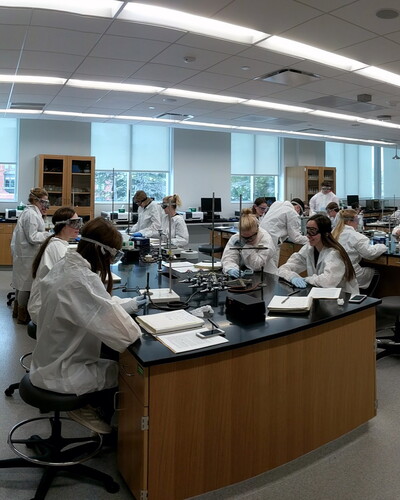
Get in the lab quicker. Collaborate with professors on real scientific research during your first year. Experience the kinds of hands-on learning that most scientists don’t get until graduate school.
Then go further. NWU Biology connects students to exciting research opportunities at labs in Lincoln and around the world. The department also offers frequent opportunities to learn and work in Costa Rica, Belize, Honduras and the Minnesota Boundary Waters.
Do more than get your feet wet. At NWU, you can dive in.
Get amazing results.
Our experience-based approach to science learning brings out your best.
Many people choose an NWU Biology degree to become physicians. An impressive 86 percent of them succeed on the MCAT exam and get into medical school. In fact, Nebraska Wesleyan is the University of Nebraska Medical Center’s third-largest contributor of medical students—behind only much larger schools.
We’re equally renowned at preparing scientists for graduate study and careers in research, industry, health sciences, genetics, animal science, education and ecology. NWU graduates regularly pursue a wide variety of biology careers.
Outstanding research placements help NWU biology degree students stand out. Recent placements include major labs at the University of Nebraska Medical Center, Stanford University and the Massachusetts Institute of Technology.
Biology faculty
NWU Biology has about twice the number of full time professors as the departments at most of our regional peers. Their expertise gives you more variety and a greater reach. And they’re willing and eager to collaborate with you on research.